
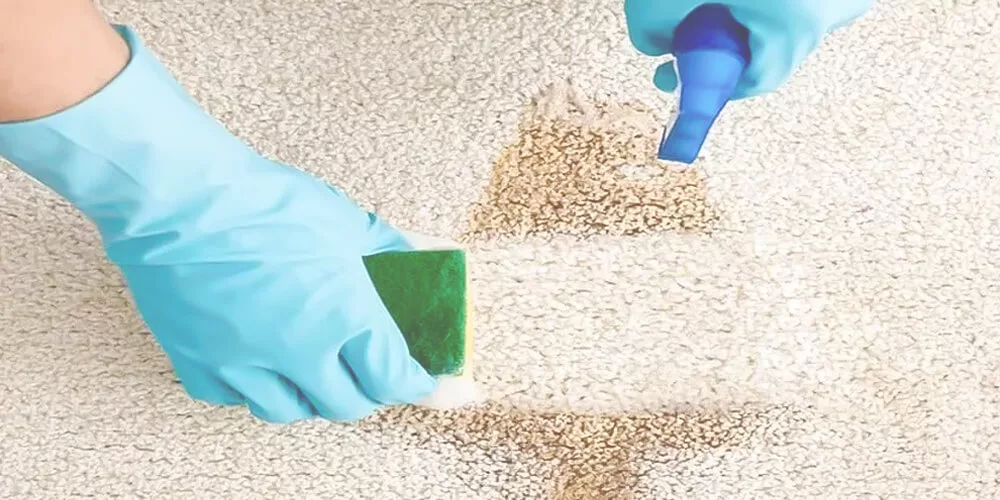
The safest way to clean upholstery around a baby is to use fragrance-free, low-residue cleaners with hot-water extraction or low-moisture methods, rinse out leftover product and dry the furniture fully before your child touches it. “Non-toxic” is a marketing term rather than a legal standard, so the ingredients, the rinse step and the drying time matter more than the label.
What Does “Non-Toxic” Mean in Upholstery Cleaning?
Non-toxic upholstery cleaning is a cleaning approach that uses products and methods unlikely to cause harm through skin contact, inhalation or accidental ingestion when used as directed.
Baby-safe upholstery cleaning is a stricter version of that idea. It assumes a child will crawl on, chew and touch the fabric within hours, so it focuses on minimal residue, low fumes and complete drying.
Residue is the film of cleaner, soap or protector left in fabric fibers after cleaning. It is the main way a baby is exposed to cleaning chemicals on a couch.
Why Babies Face Higher Exposure on Upholstery
Babies spend more time close to soft surfaces than adults do. They crawl, nap, drool and put hands and toys in their mouths, which brings fabric residue directly into contact with skin and lips.
Infants also breathe faster relative to body weight, so airborne fumes from solvent cleaners and aerosol sprays reach them sooner. That is why ventilation and low-odor products are part of safe cleaning, not an extra.
Safest Products for Cleaning Baby-Friendly Upholstery
These options have the best track record for low residue and low irritation when used correctly:
- Distilled water. Works as both a gentle cleaner for fresh spills and a rinse to lift leftover soap. It prevents the mineral spots tap water can leave.
- Mild, unscented liquid soap. A few drops in a cup of distilled water handles many food and milk stains. Use sparingly and always rinse.
- Baking soda. Absorbs odors and moisture from dry surfaces. Sprinkle, wait, then vacuum thoroughly so no powder remains in the seams.
- Hydrogen peroxide (3%). Can lift organic stains on light, colorfast fabrics. It may bleach colors, so test a hidden spot first.
- Fragrance-free enzyme cleaners. Break down milk, formula, spit-up and urine. Choose a product with a complete ingredient list and rinse after use.
- Products with the EPA Safer Choice label. The EPA Safer Choice program reviews every ingredient in a product against human health and environmental criteria.
Ingredients and Products to Avoid
- Chlorine bleach and ammonia. Harsh fumes, and they must never be mixed with other cleaners.
- Quaternary ammonium disinfectants. Common in sprays and wipes, and they leave residue that can irritate skin and airways.
- Added fragrance and essential-oil blends. A frequent cause of skin and respiratory irritation in young children.
- Solvent spot removers. Strong vapors, and they are not needed on most water-safe fabrics.
- Fluorinated (PFAS) stain protectors. Ask for PFAS-free options if you want a protector at all.
- Heavy foaming shampoos. Foam is hard to rinse and tends to leave sticky residue.
Cleaning Methods Compared: Which Are Baby-Safe?
Hot-water extraction is a cleaning method that injects heated water and a small amount of cleaner into the fabric and immediately vacuums it back out together with the dissolved dirt.
| Method | Chemical load | Drying time | Baby-safety notes |
|---|---|---|---|
| Hot-water extraction (with mild cleaner) | Low | Several hours to a day | Excellent rinse effect when done by a trained technician. Requires full drying. |
| Steam cleaning | Very low | Short to moderate | Mostly heat and water. Not suitable for heat-sensitive fabrics. |
| Low-moisture / dry-compound | Low to medium | Short | Must be vacuumed out completely so no powder remains. |
| DIY spot cleaning with soap and water | Very low | Short | Safe for small stains. Rinse and blot to avoid residue. |
| Solvent (dry) cleaning | High | Short | Strong fumes. Avoid unless the tag says S and the baby is out of the home. |
| Aerosol sprays and disinfectant wipes | High | Short | Leaves residue and airborne particles. Not recommended on baby surfaces. |
How to Clean a Couch Safely at Home With a Baby
Follow these steps for light cleaning and fresh stains:
- Check the cleaning code. W means water-based cleaners are safe, S means solvent only, WS allows both and X means vacuum only.
- Vacuum thoroughly. Use the upholstery attachment on cushions, seams and crevices.
- Patch test. Dab cleaner on a hidden spot and let it dry to check for color transfer.
- Blot stains. Work from the edge inward with a lightly damp white cloth. Never rub or soak.
- Rinse. Blot with a cloth dampened with distilled water to lift leftover cleaner.
- Dry completely. Use a fan and open windows, and keep your baby off the couch until it is dry throughout.
Expert tip: Technicians see the same mistake again and again: too much cleaner, too little rinsing and too much water.
When Professional Cleaning Is the Safer Choice
Professional cleaning is often safer than DIY for large stains, urine, mold odors or heavily soiled fabric. Trained technicians match the method to the fabric and use extraction equipment that removes more soap and soil than hand blotting can.
For fabric couches, sectionals and chairs, a professional upholstery cleaning service can remove spit-up, formula and diaper-stage messes with fabric-safe methods. Leather needs a different approach, so see leather furniture cleaning before using any home product on it.
Families often clean more than the couch. A baby sleeps on a crib mattress, naps on a play mat and rolls across floors, so mattress cleaning, carpet cleaning and rug cleaning complete the safe-surface routine in a nursery or living room.
If you live in Chicago or the nearby suburbs, check the service areas we cover to see appointment options in your neighborhood.
Questions to Ask Any Cleaning Company
- Which products do you use, and can I see the ingredient list or safety data sheets?
- Are they fragrance-free and low-residue?
- Do you use extraction to remove cleaner after application?
- How long should the furniture dry before my baby uses it?
Trusted Sources and Standards to Check
The EPA Safer Choice label and Green Seal certification evaluate ingredients rather than marketing claims, and manufacturer safety data sheets (SDS) list hazards in a standard format.
For child health questions such as skin irritation, breathing problems or accidental ingestion, consult your pediatrician or a poison control center right away. A cleaning company should never replace medical advice.
Frequently Asked Questions
Is steam cleaning safe for upholstery if I have a baby?
Yes, steam or hot-water extraction is among the safest methods because it relies mostly on heat and water rather than chemicals. Dry the furniture fully before your baby uses it.
How long should I keep my baby off a couch after cleaning?
Wait until the fabric is completely dry, which often takes several hours and up to a day depending on airflow, humidity and fabric type. Cushions can feel dry on top while staying damp inside.
Is vinegar a safe upholstery cleaner around babies?
Diluted white vinegar is low in toxicity, but it can damage some fabrics and leave a strong smell. Check the care code and patch test first.
Does “eco-friendly” or “natural” mean a cleaner is baby-safe?
No, these terms are not regulated and can appear on products with strong fragrances. Look for full ingredient lists and third-party labels such as EPA Safer Choice.
Can professional upholstery cleaning be baby-safe?
Yes, if the company uses fragrance-free, low-residue products, extracts thoroughly and gives clear drying instructions. Ask for product names before the appointment.
Should I use fabric protector on a couch my baby uses?
Choose a PFAS-free, water-based protector if you want one, and let it cure fully first. Many families skip it and use washable covers instead.