
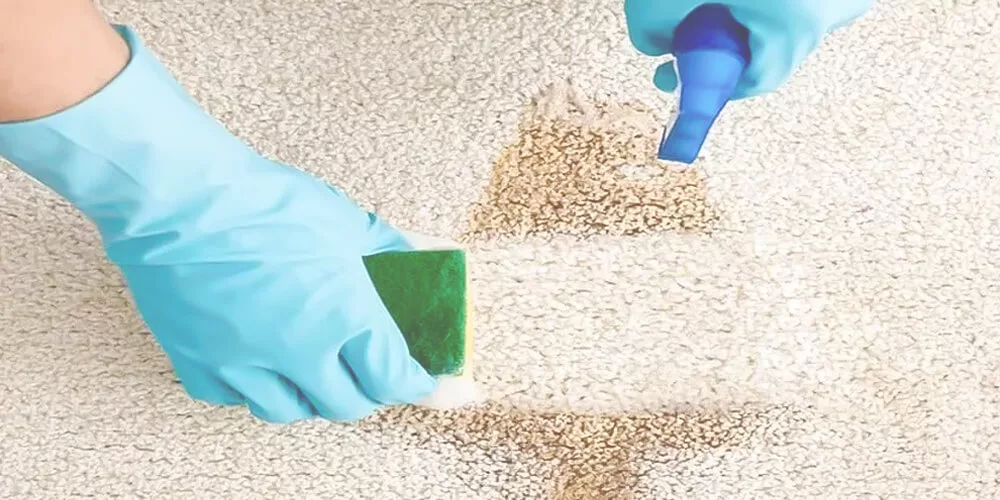
To remove odor from carpet for good, you have to find the source, clean the carpet fibers and the pad beneath them, and dry everything completely. Baking soda and vacuuming handle light, general smells. Pet accidents, smoke, spills and moisture need deeper treatment, and in Chicago homes the most reliable option is professional hot-water extraction with deodorizing.
What Causes Odor in Carpet?
Carpet odor is the smell released when bacteria, mold or chemical residues break down organic matter trapped in carpet fibers, the pad or the subfloor. Carpet works like a large filter. It catches dust, skin cells, pet dander, spilled drinks, food crumbs and everything people bring in on their shoes.
Most of that material sits below the surface. When it stays damp or warm, bacteria feed on it and produce odor. That is why a carpet can look clean and still smell stale on a humid day.
The carpet pad is the usual hiding place. It is porous, so a spill that passes through the fibers can soak into the cushioning and stay there long after the surface dries.
Key Terms
- Carpet pad is the cushioning layer between the carpet and the floor. It absorbs liquids and can hold odor even when the top of the carpet looks clean.
- Enzymatic cleaner is a product that uses enzymes to break down organic residues such as urine, food and bodily fluids, which destroys the source of the smell instead of covering it.
- Hot-water extraction is a deep-cleaning method that injects a cleaning solution into carpet and pulls the dissolved dirt and moisture back out with strong suction.
- Dwell time is the period a cleaning product must stay on the carpet to work, which is given on the product label.
- Deodorizing is the treatment step that neutralizes remaining odor molecules after the carpet has been cleaned.
Find the Source: What Does Your Carpet Smell Like?
Different smells have different causes, and the right fix depends on the source.
| Smell | Likely source | Best approach | DIY or pro? |
|---|---|---|---|
| Sharp, ammonia-like | Pet urine in fibers or pad | Enzymatic treatment and extraction | Pro for repeated or old spots |
| Musty, damp | Moisture, mildew, slow drying | Dry fast, extract, fix the moisture source | Pro if it spreads or returns |
| Stale, smoky | Smoke residue in fibers | Deep extraction and deodorizing | Pro |
| Sour, food-like | Spilled milk, drinks, cooking residue | Blot, enzymatic cleaner, rinse | DIY if fresh |
| Dusty, flat | Embedded soil and dander | Slow vacuuming, then deep cleaning | DIY for light cases |
| Chemical, perfumed | Leftover cleaner or fragrance product | Extraction rinse to remove residue | Pro |
Common Carpet Odor Myths
- Myth: Air fresheners solve the problem. Fact: They cover the smell for a short time while the source stays in the carpet.
- Myth: More water means a deeper clean. Fact: Over-wetting soaks the pad and can cause a musty smell as it dries slowly.
- Myth: Baking soda removes everything. Fact: It helps with light odors, but it cannot reach contamination in the pad.
- Myth: Scrubbing harder works better. Fact: Scrubbing spreads the contamination and damages the fibers.
- Myth: The smell will fade by itself. Fact: Bacteria keep feeding on the residue, so the odor often returns when humidity rises.
How to Remove Carpet Odor at Home: Step by Step
This routine works for light odors and recent spills.
- Find the source. Smell the carpet close to the floor, and check pet spots, spill areas, entryways and wall edges.
- Vacuum slowly. Go over the area in two directions to remove dry soil, hair and crumbs.
- Blot moisture. Press a white towel into damp spots. Do not rub.
- Apply baking soda. Spread it over dry carpet, wait several hours or overnight, then vacuum.
- Use an enzymatic cleaner for organic smells. Test a hidden spot first, then follow the dwell time on the label.
- Rinse by blotting. Use a cloth with clean water to remove residue.
- Dry fast. Use fans, ventilation or a dehumidifier.
Room-by-Room Odor Guide
Entryway and Hallway
Shoes bring in street dirt, road salt and moisture, especially in Chicago winters. Use mats, take off shoes and vacuum the entry more often than other rooms.
Living Room
This room collects food spills, pet dander and body oils from furniture. Clean the carpet together with the couch, since odors move between them.
Bedroom
Dust, skin cells and humidity gather here. A fresh carpet and a clean mattress make the whole room smell better.
Kitchen and Dining Area
Cooking grease and drink spills sink into the carpet near tables. Blot spills at once and treat sour smells with an enzymatic cleaner.
Basement
Basements hold moisture, so musty smells are more common. Control humidity with a dehumidifier and fix leaks, because cleaning cannot solve a recurring water problem.
When Home Methods Are Not Enough
Call a professional when one or more of these signs appears:
- The smell returns a few days after you clean.
- Pet accidents happened many times in the same area.
- The odor is musty, which may point to trapped moisture.
- Smoke or cooking odors cover the whole room.
- You cannot find the exact source of the smell.
- The carpet was soaked and stayed wet for a long time.
Moisture needs quick action. According to EPA guidance on water-damaged materials, wet building materials should be dried within 24 to 48 hours to help prevent mold growth.
How Professionals Remove Carpet Odor
A professional carpet cleaning service treats the cause, not only the smell. The technician checks the carpet type, the stain and odor zones and the overall condition before choosing a method.
- Inspection. The technician locates odor zones, stains and heavily used areas.
- Pre-treatment. A fabric-appropriate solution loosens dirt, oils and residue.
- Spot and stain treatment. Pet spots, spills and discolored areas receive targeted care.
- Hot-water extraction. The solution and dissolved soil are pulled out of the carpet.
- Deodorizing. A professional deodorizer neutralizes remaining odor.
- Drying guidance. The technician explains how to dry the carpet properly and when it is safe to walk on it.
Technician insight: Chicago Couch Cleaning technicians explain that an odor treatment is only as good as its inspection. Severe pet contamination can go deeper than the fibers, so they tell customers what results are realistic before the work starts. The team is IICRC-certified, and IICRC S300 is the industry standard for professional upholstery cleaning, which the team applies across its upholstery and carpet work.
Why Odor Problems Return in Chicago Homes
Chicago’s seasons put pressure on indoor air. Winters keep windows closed, so smells stay inside, while humid summers can bring musty odors back to carpets that stayed slightly damp. Basements and ground-floor apartments add moisture to the mix.
A regular schedule helps more than occasional rescue cleanings. A yearly deep cleaning, plus fast action on spills, keeps odors from building up.
Refresh the Whole Interior, Not Only the Carpet
Odors spread between surfaces, so a full refresh gives the best result. Many customers combine carpet work with upholstery cleaning for couches and chairs, rug cleaning for area rugs, mattress cleaning for bedrooms and hardwood floor cleaning for the rooms next to carpeted areas. Leather pieces need different care, which is covered by leather furniture cleaning.
Offices, hotels, restaurants and waiting rooms can book commercial carpet cleaning and commercial upholstery cleaning to keep shared spaces fresh.
Carpet Odor Removal Across Chicago
The team works on-site, so you do not need to move the carpet. Local pages for popular neighborhoods:
- Upholstery and carpet care in Uptown
- Upholstery and carpet care in Rogers Park
- Upholstery and carpet care in Irving Park
- Upholstery and carpet care in Albany Park
- Upholstery and carpet care in Bucktown
See the full service area, or request a fast estimate. You can also call (773) 829-2235.
Keep Your Carpet Smelling Fresh: A Simple Schedule
- Daily: blot spills right away and use door mats.
- Weekly: vacuum high-traffic areas slowly, in two directions.
- Monthly: check pet areas, basements and corners for dampness.
- Seasonally: run a dehumidifier in humid months and air out rooms in winter when possible.
- Yearly: book professional deep cleaning, or twice a year with pets, kids or smokers.
Frequently Asked Questions
Why does my carpet still smell after cleaning?
The source is often deeper than the carpet fibers, in the pad or subfloor, or the carpet was left damp. Surface cleaning and fragrance products do not remove odor that is trapped below the surface.
Does baking soda really remove carpet odor?
Baking soda absorbs light, general odors from the carpet surface. It does not remove deep pet urine, mildew or smoke residue.
Can professional carpet cleaning remove pet urine smell?
Professional cleaning can remove many pet odors, but severe contamination can reach the pad, so an inspection is needed to set realistic expectations.
How long does carpet take to dry after cleaning?
Drying time depends on the carpet, the cleaning method, airflow and humidity. Good ventilation and fans speed it up, and the technician should give you drying guidance.
How often should carpet be deep cleaned to prevent odors?
Once a year is a good baseline, and every six months in homes with pets, children, smokers or heavy foot traffic.
Is carpet odor removal safe for kids and pets?
Yes. Professional carpet cleaners use eco-friendly cleaning solutions selected to be safe for families and pets.